How to Get Started with Strategic Planning for Your Business
Vision & Strategy
Business Strategy Consulting & Coaching
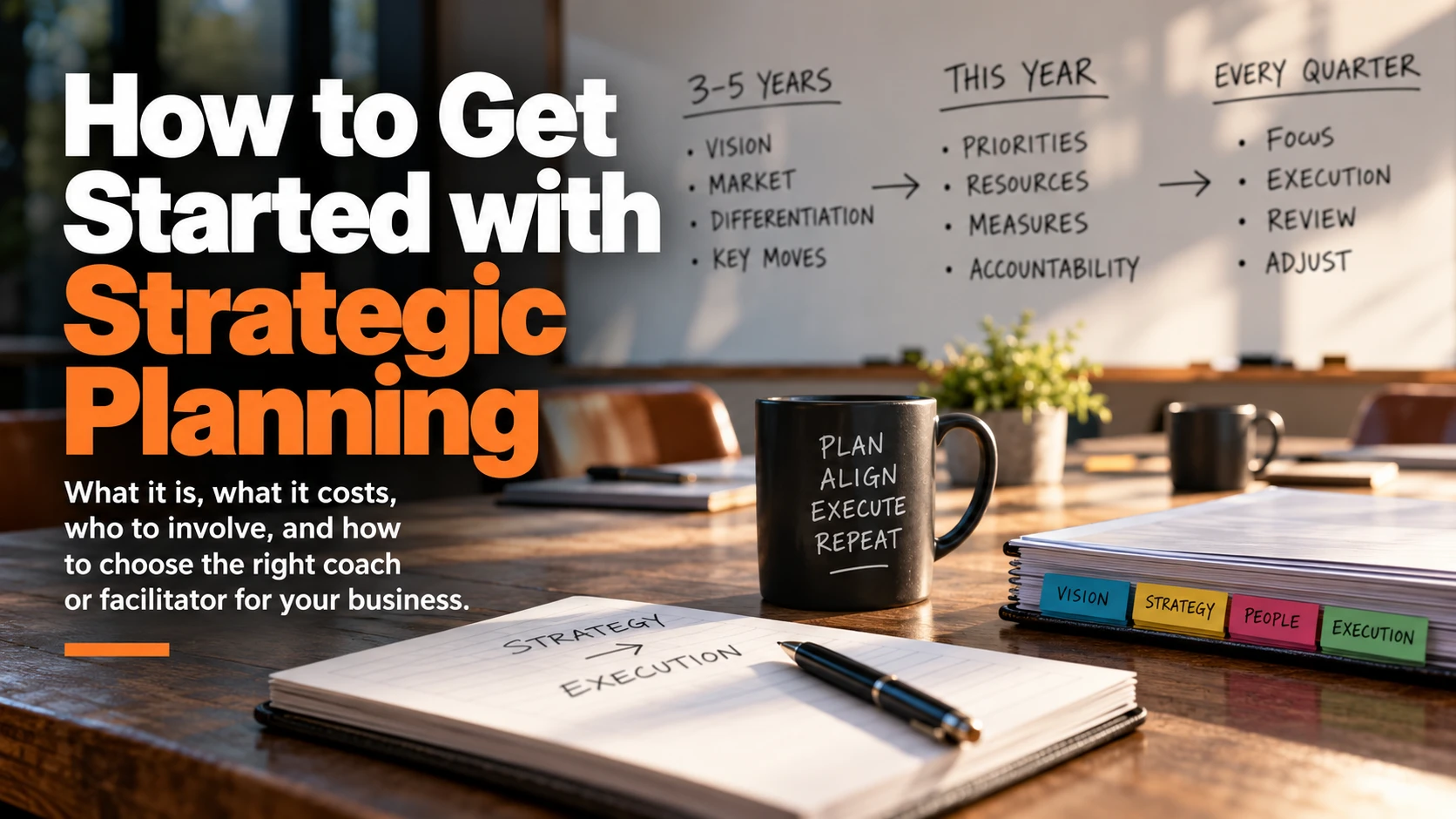
You want things to change. You want a plan you can actually execute. And now you’re trying to figure out where to start — because there are a hundred companies that will tell you they do “strategic planning,” and it’s not obvious what you get, who to pick, or what it costs.
I’m Mike Knapp, founder of Incrementa (un)consulting. I work with mid-sized businesses to help them develop their vision, their strategy, and execute like hell. That’s what this is for.
Strategic planning and annual planning are different activities — but they’re not competing approaches. The strongest businesses integrate both.
Strategic planning defines where the organization is going, where it will compete, and how it will win. It answers the big questions: What does success look like in three to five years? What strategic moves will get us there? What do we need to be great at?
Annual planning translates that strategy into what needs to happen this year. Built into frameworks like Scaling Up, EOS, and Metronomics, a well-run annual planning session — typically two days — covers vision, strategy, culture, and execution discipline together. You come out with a clear map and a specific plan for the coming quarter.
Quarterly planning breaks annual priorities into focused, achievable commitments. Weekly execution keeps those commitments moving and surfaces problems early.
A good planning process connects all four. The problem isn’t strategic planning — it’s strategic planning that never makes the transition into execution.
That failure mode is common enough it has a name: SPOTS. Strategic Plan On The Shelf. The team does good work, aligns on a direction, holds it for three to six months — and then the world changes, priorities drift, and the binder moves to the top shelf. The most effective businesses have moved toward integrated annual planning frameworks specifically because they solve this problem.
In Western Canada, a quality two-day planning engagement typically runs $15,000–$20,000. That range generally covers prep work, the session itself, and the planning outputs.
What you get for that investment varies considerably. A standalone facilitated workshop and a comprehensive planning engagement aren’t the same product. Scope, depth, deliverables, and follow-up support all affect cost — and they all affect value.
More importantly: don’t compare providers solely on the cost of the initial session. The real question is what happens after. A plan without ongoing support is still just a plan.
Keep it focused. I’ve been in large stakeholder planning sessions and they’re rarely as effective. The right number depends on your organization’s complexity, but for most mid-market businesses, 6–8 senior leaders is the sweet spot.
Get input from a broader group before the session — surveys, interviews, front-line perspective — but keep the room itself to your senior leaders.
Cover your core functional areas: company leadership, finance, HR or people and culture, operations, sales and growth. And increasingly — someone who owns technology and AI strategy. That used to be optional. It isn’t anymore. AI is becoming so central to how businesses compete that you want that perspective in the room when strategy gets built, not briefed afterward.
The title matters less than the capabilities. When you’re evaluating planning providers, think about three things:
Process facilitation: Can they design and run a productive session — manage participation, work through disagreement, keep the team moving toward clear decisions?
Strategic advisory: Do they bring business experience, frameworks, and outside perspective? Can they challenge your assumptions and strengthen your strategic thinking?
Ongoing execution support: Will they help your leadership team implement decisions, build accountability, and improve execution over time — not just during the session?
An excellent provider may offer all three, regardless of what they call themselves. What matters is understanding which of these capabilities your business actually needs — and whether the person you’re hiring can deliver them.
Someone who needs a skilled facilitator for an already-developed strategy has different needs than a leadership team that’s struggling with alignment, execution, and accountability. Don’t hire based on the title. Hire based on what you need.
Skip the RFP. Have a 15-minute call.
What you’re listening for: are they asking great questions about your business, your goals, and what’s standing in your way — or are they selling you on why you should hire them?
The best providers listen hard from the very first conversation. That understanding is the foundation for everything that follows. A coach or facilitator who gets your business before they walk in the room will run a very different session than one who shows up with a generic agenda.
Don’t get too focused on the framework. What matters is that the path they take you down covers what you actually need: long- and short-term vision, the strategic moves to get there, culture defined in behavioural terms, and a clear execution plan with owned outcomes.
More than most sessions do. A lot of planning engagements concentrate on goals without adequately addressing strategy — and that’s a problem.
At minimum, you should be defining:
As you grow, this becomes more important, not less. Ask any prospective provider how much time they spend on strategic differentiation. The answer will tell you a lot.
You knew this was coming. Thank you for staying this long.
Incrementa does very few one-time planning sessions. Not because we can’t run them — because they don’t deliver what we’re actually trying to help you build.
A single session, no matter how good, is an event. It produces a plan. Plans are only as good as what happens after them.
What we’re building with clients is a transformation. A full planning cycle — annual planning connected to quarterly planning, connected to weekly execution, connected to ongoing coaching — where every pass makes the business stronger. Vision to strategy to culture to execution, running continuously.
And built into that cycle is something most planning engagements skip entirely: developing your executive team into an all-star team. Not just aligning them on a plan — assessing who’s in which seat, identifying where the gaps are, and actively developing the leaders around you so the business doesn’t depend on any one person to hold it together.
The difference between a great session and a great business is what happens in the 250 working days after the session. And the 250 after that.
We don’t make binders. We help you build something.
Strategic planning defines where the organization is going and how it will win. Annual planning translates that direction into priorities and commitments for the coming year. They’re not competing approaches — the strongest businesses integrate both. The problem isn’t strategic planning; it’s planning that never connects to execution.
Most strategic plans fail because they’re treated as events rather than part of an ongoing management process. The team aligns, holds the direction for a few months, and then the world changes. This is common enough it has a name: SPOTS — Strategic Plan On The Shelf. Integrated annual planning frameworks exist specifically to solve this.
In Western Canada, a quality two-day planning engagement typically runs $15,000–$20,000, depending on scope, preparation, and deliverables. A standalone facilitated session and a comprehensive engagement with follow-up support are different products at different price points. Don’t compare providers solely on day rates — compare what you’re actually getting.
Have a 15-minute call rather than sending an RFP. Listen for whether they’re asking great questions about your business or selling themselves. Evaluate which capabilities you actually need: process facilitation, strategic expertise, and ongoing execution support are three different things — make sure you’re buying what your business requires.


